
Title: Wakulla County Land Use Rules: The Citizen’s Guide to Understanding Future Land Use and Zoning (Part 1 of 4)
Learn how Wakulla County’s land use system really works. This 4-part guide explains Future Land Use categories, zoning districts, and the hearing process so you can understand public notices and participate with confidence.
DEVELOPMENT & INFRASTRUCTURE2026
Sunshine Florida
3/25/20265 min read

Newspaper advertisements for public hearings in Wakulla County frequently announce rezonings or comprehensive plan amendments. Common examples include notices such as “Rezoning from RR-5 to RSU-2” or “Change Future Land Use from Rural-2 to Urban-1.” These announcements describe proposed changes to how land may be developed.This four-part series provides a clear, step-by-step explanation of Wakulla County’s land use system. It is designed as a practical educational resource so residents can interpret public notices, understand what proposed changes would allow, and participate effectively in the review process.
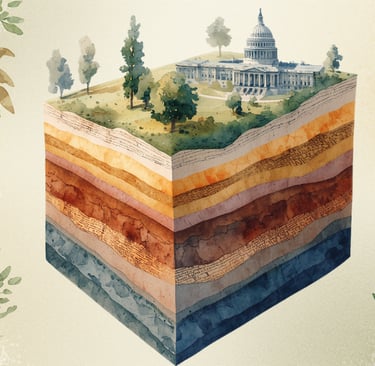
The county’s land use regulations are organized in three layers that build upon one another:
The top layer is the Comprehensive Plan and Future Land Use Map, which establishes the long-term policy framework and density limits for every parcel.
The middle layer consists of zoning districts, which translate the broad policies into specific rules for permitted uses, lot sizes, and development standards.
The bottom layer includes site-specific reviews such as permits, site plans, and concurrency requirements.
Part 1 examines the overall structure of the system and explains how the three layers work together.
Part 2 provides a detailed breakdown of the Future Land Use categories and their associated densities.
Part 3 reviews the zoning districts, including their purposes, typical uses, and what a rezoning would allow.
Part 4 describes the permit, site plan, and hearing process, including timelines and opportunities for public input.
By understanding these layers, citizens can more effectively review public notices, evaluate proposed developments, and provide informed comments during the appropriate stages of review. The strongest opportunities for influence typically occur at the comprehensive plan amendment stage, because later stages focus primarily on technical compliance with the adopted policies.
1. The Top Layer: The Comprehensive Plan and Future Land Use Map
The Comprehensive Plan serves as the long-term policy framework for growth in Wakulla County. Its Future Land Use Element includes an interactive map that assigns every parcel a land use category. All rezonings, subdivisions, and development permits must be consistent with the Future Land Use designation for that property. Changing a parcel’s Future Land Use category requires a formal amendment, which involves additional public review.
The main Future Land Use categories and their typical residential densities are as follows:
Agriculture: Focuses on farming and timber production. Density is generally one dwelling unit per 20 to 40 acres.
Rural-1: Very low-density rural and agricultural fringe. Density ranges from one unit per 5 to 20 acres.
Rural-2: Flexible rural residential. Density ranges from one unit per 2 to 5 acres, with some allowance for small commercial uses.
Rural-3: Entry-level suburban-rural transition. Density ranges from one unit per 1 to 5 acres.
Urban-1 (Fringe): Transition area near towns. Density may reach up to two units per acre with utilities.
Urban-2 (Core/Service): Higher-density areas with services. Density may reach up to 10 units per acre in fully serviced locations.
Sustainable Community: Planned higher-density development with supporting infrastructure.
Conservation and Conservation Residential: Areas protected for natural resources. Density is limited to one unit per 3 to 40 acres.
Commercial, Industrial, and Public Facilities: Focused on business, manufacturing, or public uses.
Town Center and Suburban Transitioning: Mixed-use areas, primarily in or near Crawfordville proper.
To determine the designation for any specific property, consult the interactive GIS portal before reviewing any public notice.
2. The Middle Layer: Zoning Districts
Zoning regulations, contained in Chapter 5 of the Wakulla County Land Development Code, implement the Future Land Use policies. A property’s zoning district must be consistent with its Future Land Use category. Rezoning changes the permitted uses, lot sizes, setbacks, and development standards for a specific parcel.The major zoning districts are grouped below with a brief description of their purpose, typical uses, and general scale.
Preservation, Conservation, Agriculture, and Rural Districts
P-1 Preservation: Provides strict protection for sensitive lands such as wetlands and critical habitats. Development is extremely limited.
P-2 Conservation: Protects natural resources with slightly more flexibility for low-impact uses than P-1.
AG Agriculture: Supports farming, timber operations, and rural estates on large lots.
RR-5 Rural Residential: Allows very low-density single-family homes, typically on minimum five-acre lots.
RR-2 Rural Residential: Provides slightly smaller lots than RR-5 while maintaining a rural character.
RR-1 / RR-1(a) Semi-Rural Residential: Serves as a transition toward suburban development with larger lots and a focus on single-family homes.
Semi-Urban and Residential Districts
RSU-1 Semi-Rural Residential: Offers low-to-moderate density single-family development as a transition from rural areas.
RSU-2 Semi-Urban Single-Family: Allows higher-density single-family homes on smaller lots where utilities are available.
R-1A / R-1 Single-Family Residential: Establishes standard single-family neighborhoods and protects existing residential character.
R-2 Two-Family (Duplex) Residential: Permits duplexes and attached single-family units at moderate density, typically requiring sidewalks and open space.
R-3 Multifamily Residential: Allows apartments and condominiums at higher densities in areas with strong infrastructure.
RTH Townhouse Residential: Provides for attached townhomes in a clustered configuration.
RMH-1 Mobile Home Residential: Permits manufactured homes on individual lots.
RMH-2 Mobile Home Park: Allows organized mobile home parks with varying densities.
Commercial, Industrial, and Mixed-Use Districts
CO Office Commercial: Accommodates professional offices with low traffic impact.
C-1 Neighborhood Commercial: Supports small-scale shops and services for nearby residents.
C-2 General Commercial: Allows broader retail and service uses with higher traffic potential.
C-3 Heavy Commercial: Provides for larger or more intensive commercial activities, such as auto sales.
C-4 Downtown Commercial: Focuses on mixed retail and office uses in the Crawfordville area.
I-1 Light Industrial: Supports low-impact manufacturing and warehousing.
I-2 Heavy Industrial: Accommodates more intensive industrial operations.
TC Crawfordville Town Center: Permits mixed-use development in the town core.
CC Crawfordville Cottage Commercial: Allows small-scale commercial uses in the Crawfordville area.
HIC / LIC: Designates high-intensity or low-intensity commercial areas.
LDR / HDR Overlays: Adjust density standards in specific locations.
Other and Special Districts
CTTP Travel Trailer Park: Provides for recreational vehicle and camper parks.
PUD Planned Unit Development: Offers flexible mixed-use development with custom standards; density bonuses may be available when consistent with the Future Land Use category.
RC-1 Rural Commercial: An older district for limited rural business uses (may be limited or repealed in some areas).
Current zoning for any parcel can be viewed on the county GIS portal. A rezoning application changes the applicable rules for that property.
3. The Bottom Layer: Permits, Site Plans, and Concurrency
Even after Future Land Use and zoning requirements are satisfied, individual projects must obtain site plan approval, demonstrate concurrency (adequate capacity for roads, water, wastewater, schools, and other services), and secure development permits. These reviews ensure compliance with detailed standards for drainage, environmental protection, and infrastructure.
Public notices for rezonings, major site plans, and related approvals are published in the newspaper, posted on the property, mailed to nearby owners, and listed on the county website. Hearings are held before the Planning Commission (advisory) and the Board of County Commissioners (final decision).Approvals at this stage frequently pass with strong majorities when proposals meet technical requirements. Citizens can participate by reviewing notices, attending hearings, and submitting written comments. Effective participation at the comprehensive plan amendment stage offers the broadest opportunity to influence long-term outcomes, as later stages focus primarily on technical compliance.
Reference Links
Wakulla County Planning & Zoning: https://www.mywakulla.com/departments/planning_and_community_development/departments/planning_and_zoning
GIS Portal (FLU & Zoning Maps): https://gis-portal-update-wakullaplanning.hub.arcgis.com/pages/zoning
Land Development Code (Chapter 5): https://library.municode.com/fl/wakulla_county/codes/code_of_ordinances
Public Notices and Agendas: https://www.mywakulla.com
Contact Planning & Zoning: 850-926-3695 or planning@mywakulla.com
This guide and the four-part series are intended solely as an educational resource to help Wakulla residents become better informed participants in local land use decisions. For questions about a specific property or proposal, please contact the Planning & Zoning Division directly.
Additional Social Links
YouTube is your go-to for short clips, video explainers, and visual breakdowns of how Florida and Wakulla governments really work.
Facebook brings you bite-sized written content, sticky-note facts, and rolling updates you can share and discuss.
NEW! TikTok You can now follow Wakulla Reports on TikTok for quick updates and BOCC video clips.
Prefer to browse at your own pace?
Bookmark our website and visit anytime for fresh posts, resources, and real-life examples from right here in Wakulla County.
© 2024. All rights reserved.